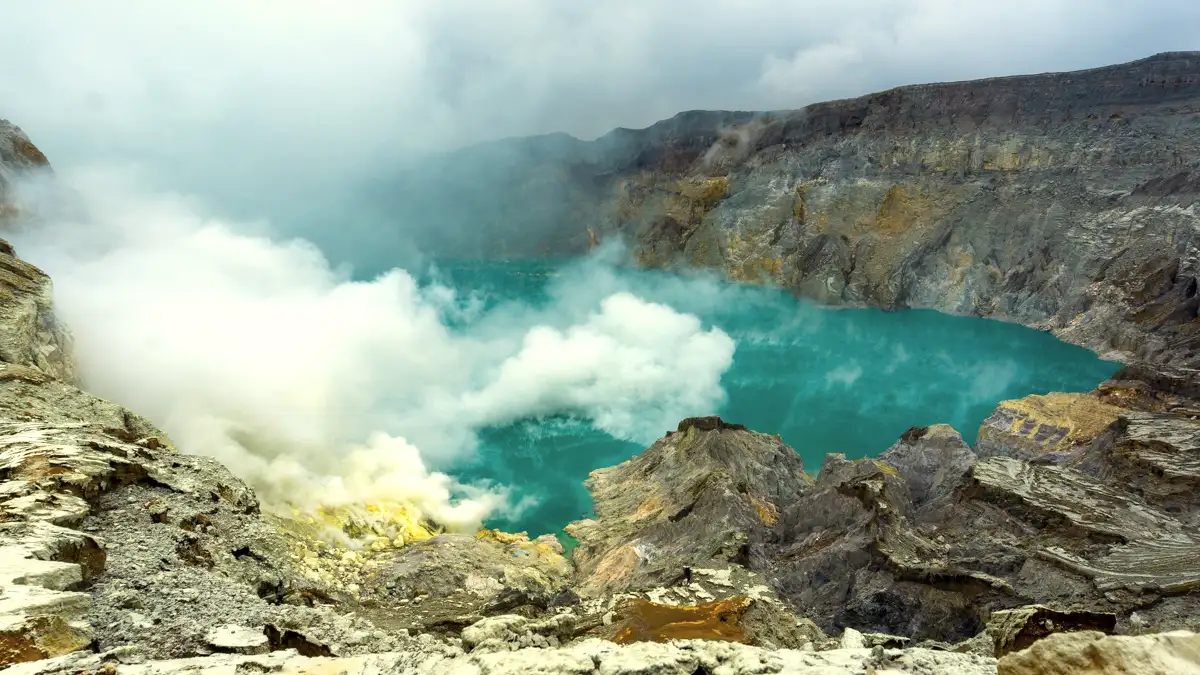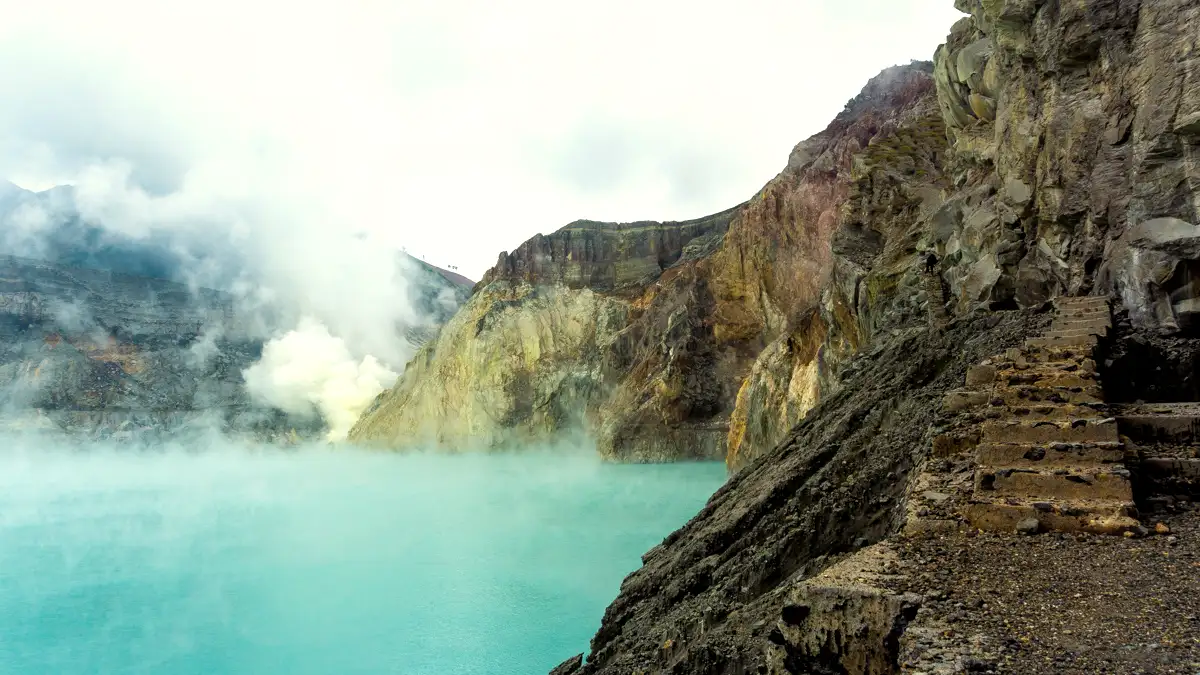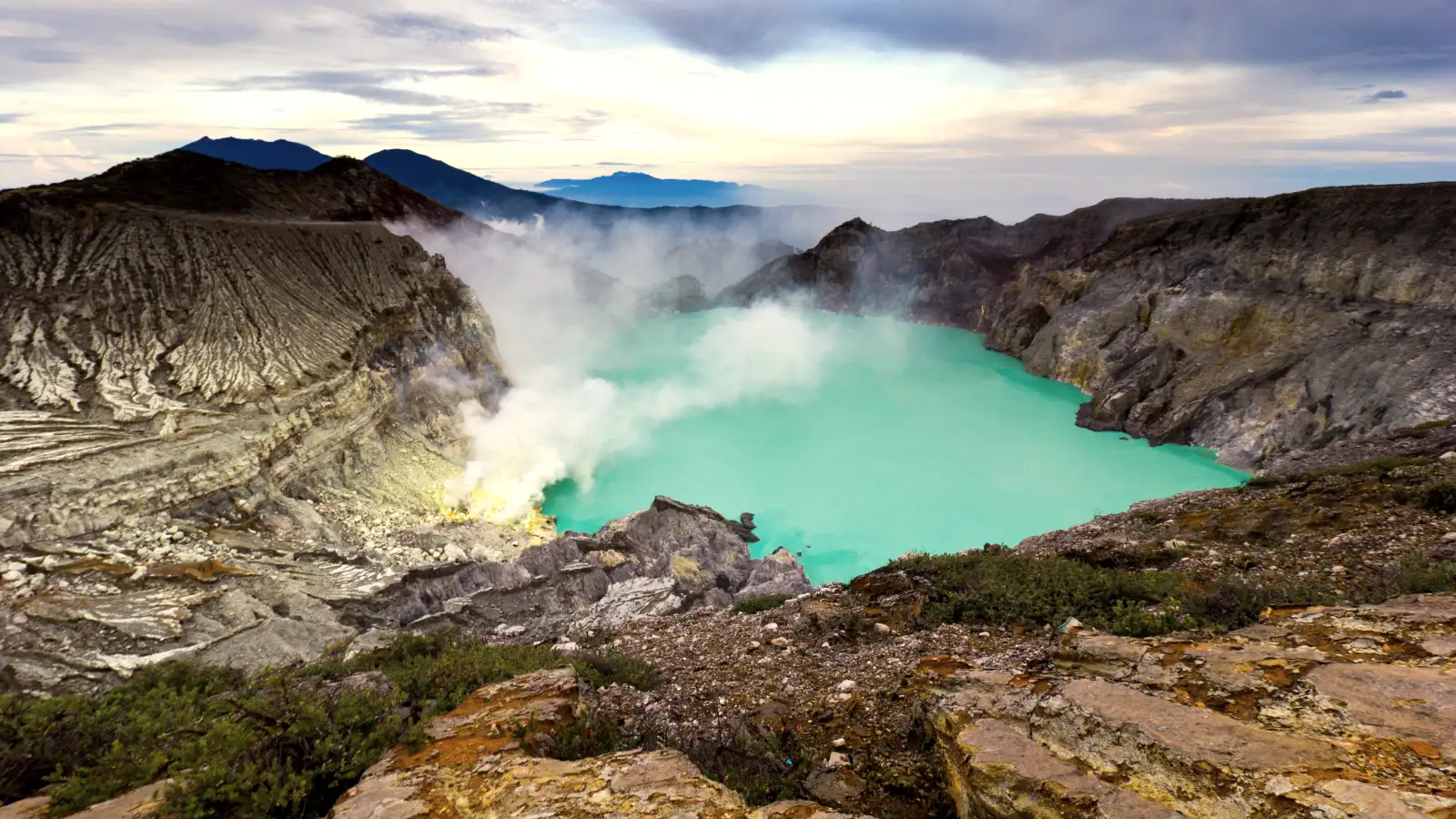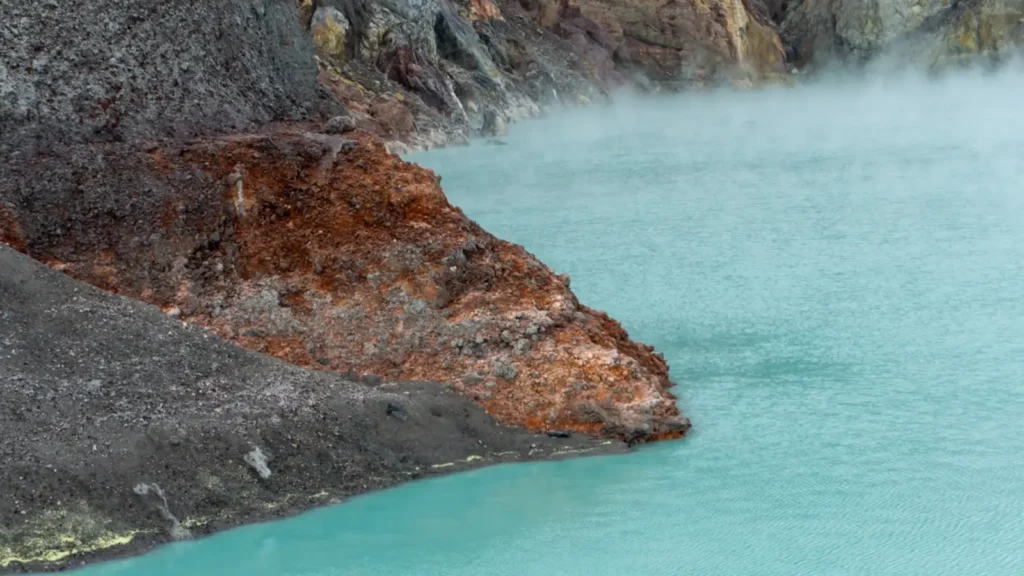
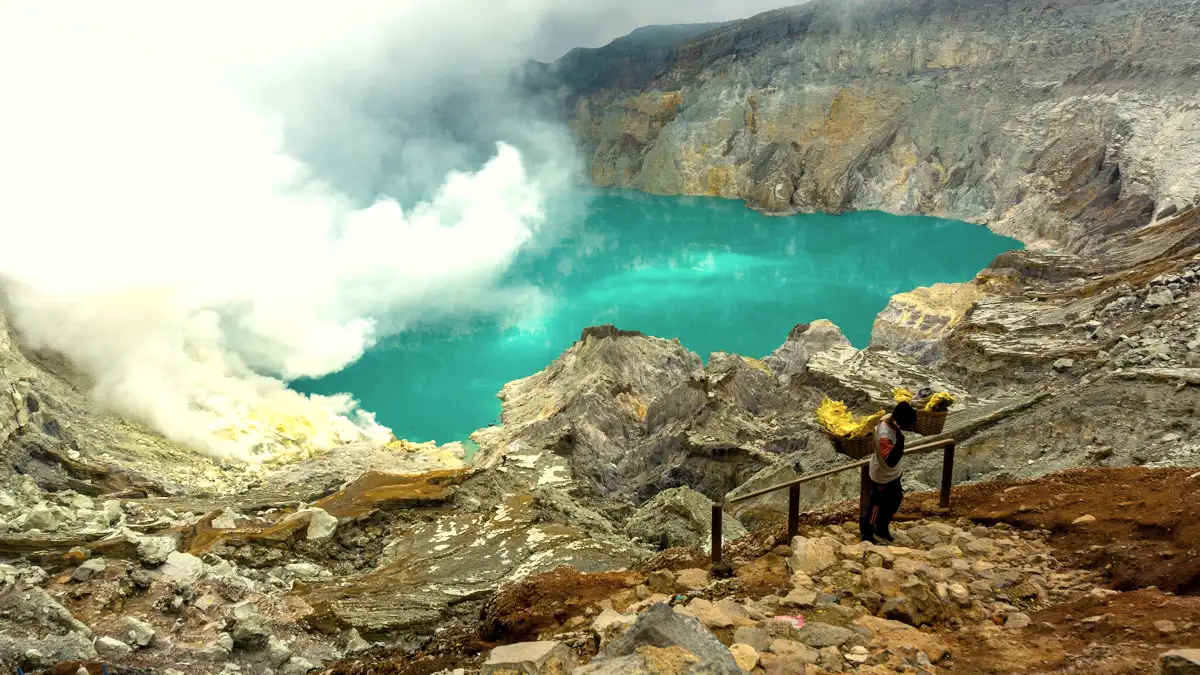
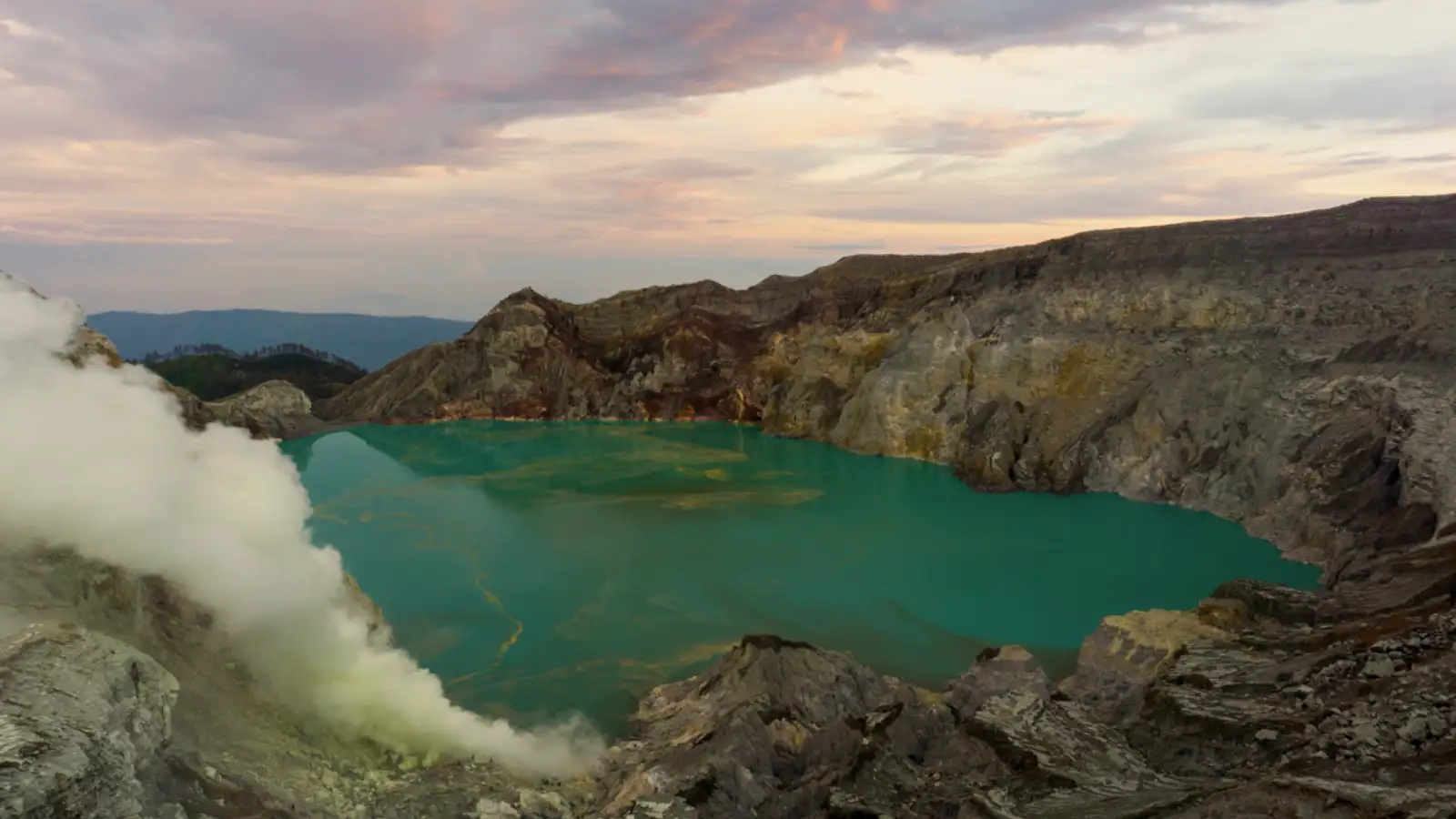
The stunning turquoise color of Indonesia’s Ijen Crater Lake is a direct result of its extreme acidity and the unique geological processes within the active volcano. This vivid hue comes from a high concentration of dissolved minerals, primarily sulfur and various metals like aluminum and iron, reacting with sulfuric acid in the water. The lake’s remarkably low pH level, often less than 0.5, makes it the world’s largest highly acidic crater lake, creating a truly unparalleled natural spectacle.
Quick Facts About Kawah Ijen
| Feature | Details |
|---|---|
| Location | East Java, Indonesia (part of the Ijen Volcano Complex) |
| Paltuding Post Elevation | 1,850 meters (starting point for the trek) |
| Ijen Summit Elevation | 2,386 meters above sea level |
| Crater Lake pH | Extremely acidic, typically below 0.5 (among the lowest in the world) |
| Health Certificate | Mandatory for entry to Ijen Crater National Park |
| Official Trail Opening | 02:00 AM Western Indonesia Time (WIB) |
| Main Attractions | Blue fire phenomenon, turquoise acidic lake, sulfur mining operations |
The Science Behind Ijen’s Turquoise Hue
The mesmerizing turquoise color of Kawah Ijen’s crater lake is a complex interplay of chemistry, geology, and light. Unlike many clear blue lakes, this color is not simply due to water depth and light reflection but is deeply rooted in the lake’s unique chemical composition.
Extreme Acidity: The Foundation of the Color
At the core of Ijen’s distinctive coloration is its incredibly low pH. The lake is essentially a giant reservoir of concentrated sulfuric acid. This acidity stems from the active volcanic gases, primarily sulfur dioxide and hydrogen sulfide, which bubble up from fumaroles beneath the lake and dissolve into the water. These gases react with water to form sulfuric acid, creating an environment inhospitable to most life forms.
Dissolved Minerals and Colloidal Sulfur
The intense acidity allows the lake water to dissolve large quantities of minerals from the volcanic rocks on the crater walls and floor. Metals such as aluminum, iron, and magnesium are present in high concentrations. When sunlight penetrates the water, these dissolved minerals, combined with tiny particles of colloidal sulfur suspended in the solution, absorb certain wavelengths of light and scatter others. The scattered light, particularly in the blue-green spectrum, is what we perceive as turquoise.
Specifically, the presence of various iron-sulfate complexes contributes significantly to the unique tint. These compounds, along with the very fine, yellowish-white sulfur particles (colloids) suspended in the water, reflect and scatter light in a way that produces the lake’s signature vibrant blue-green.
Ijen’s Geology and Persistent Volcanic Activity
Kawah Ijen is part of a larger active stratovolcano, Mount Ijen, which is itself part of the Ijen Volcano Complex. This geological setting is crucial to understanding the lake’s properties.
Fumaroles and Sulfur Deposits
Within the crater, numerous fumaroles continuously vent hot, sulfurous gases. These gases cool and condense, depositing pure elemental sulfur, which is then mined by local workers. The sulfur deposits, ranging in color from bright yellow to reddish-orange, add to the surreal landscape of the crater. The constant emission of these gases feeds the lake’s acidity and mineral content, perpetually renewing its striking color.
The volcanic activity also gives rise to the famous “blue fire” phenomenon, where ignited sulfuric gases burn at night, creating an ethereal blue glow visible from the crater floor. This phenomenon is a direct visual cue to the chemical processes occurring within the volcano.
Planning Your Visit to Kawah Ijen
A journey to Ijen Crater is an unforgettable experience, offering a blend of natural wonder and cultural insight into the lives of the sulfur miners. Proper planning is essential for a safe and rewarding trip.
Best Time to Visit and What to Bring
The dry season, generally from April to October, is the most recommended time to visit, offering clearer skies and safer trekking conditions. During the trek, temperatures can be surprisingly cold, especially before dawn, often dropping to 3°C (37°F) near the summit. Pack warm layers, a windproof jacket, sturdy hiking shoes, a headlamp, and a personal gas mask to protect against sulfur fumes. Bringing enough water and snacks is also crucial.
Visitors are required to obtain a health certificate (Surat Keterangan Sehat) from a local clinic before entry. This measure ensures trekkers are fit enough for the challenging hike and exposure to volcanic gases.
Access and Logistics
The main access point to Ijen Crater is the Paltuding Ranger Post, located at an elevation of 1,850 meters. From here, it’s approximately a 1.5- to 2-hour uphill trek to the crater rim, followed by a descent into the crater for a closer view of the blue fire and the lake.
For those traveling from Bali, a common route involves taking a ferry from Gilimanuk to Ketapang, which typically takes 45-60 minutes. It’s important to remember that Java observes Western Indonesia Time (WIB), which is UTC+7, while Bali observes Central Indonesia Time (WITA), UTC+8. There is a one-hour time difference.
Combining Ijen with Mount Bromo
Many travelers choose to combine an Ijen Crater trek with a visit to Mount Bromo, another iconic East Java volcano. This typically involves a multi-day itinerary. To reach the classic sunrise viewpoint at Penanjakan 1 (2,770m) overlooking the Tengger Caldera and Mount Bromo, a 4WD Jeep is mandatory for visitors. The rough terrain requires specialized vehicles to navigate effectively.
For seamless travel planning and guided experiences, consider exploring options for Ijen Crater tours that can also include Bromo. These packages often handle transportation, permits, and guides, allowing you to focus on the adventure.
Local Knowledge and Ground Evidence
Beyond the scientific explanations, experiencing Ijen provides visceral insights. The pervasive sulfur scent, a distinctive sulfuric acid tang in the air, becomes noticeable long before reaching the crater rim. The chill of the pre-dawn wind at 3°C bites deep, a stark contrast to Java’s typical tropical warmth. The gravel trails leading up the volcano can be challenging, requiring careful footing and adding to the sense of a true volcanic ascent.
Witnessing the sulfur miners carrying heavy baskets of sulfur up and down the treacherous slopes is a humbling experience, a stark reminder of the harsh realities intertwined with the sublime landscape. Afterwards, a warm cup of local coffee from a small warung (traditional stall) near Paltuding feels like a well-earned reward, offering a moment of warmth and reflection on the extraordinary journey.
Frequently Asked Questions About Ijen Crater Lake
Q: Is Ijen Crater Lake safe to swim in?
A: Absolutely not. Ijen Crater Lake is extremely acidic, with a pH typically below 0.5. Contact with the water can cause severe burns and is highly dangerous. Visitors must maintain a safe distance from the lake’s edge.
Q: What causes the blue fire at Ijen?
A: The “blue fire” is caused by ignited sulfuric gases. These gases emerge from cracks in the volcano at high pressure and temperature (up to 360°C). When they come into contact with oxygen in the air, they ignite, burning with a vivid blue flame. It’s best seen in complete darkness, typically between 2:00 AM and 4:00 AM.
Q: Do I need a guide for Ijen Crater?
A: While not strictly mandatory to hire a private guide, it is highly recommended, especially for first-time visitors or those planning to descend to see the blue fire. Local guides are invaluable for navigation, safety, and understanding the complex environment and the mining operations.
Q: What are the health requirements for visiting Ijen?
A: All visitors are required to present a health certificate (Surat Keterangan Sehat) from a doctor, stating they are fit to undertake the trek and be exposed to volcanic gases. This certificate ensures your well-being in this challenging environment.
Q: How difficult is the trek to Ijen Crater?
A: The trek is considered moderately difficult. The path from Paltuding to the crater rim is an uphill climb on a well-defined but sometimes gravelly trail, lasting about 1.5 to 2 hours. The descent into the crater to see the blue fire is steeper and more challenging, particularly in the dark, and requires good physical condition.
Q: Are gas masks necessary?
A: Yes, a proper gas mask is essential. Sulfur dioxide fumes from the active vents are harmful if inhaled directly. Masks are often provided by tour operators or can be rented at the Paltuding post.
Conclusion
Kawah Ijen Crater Lake is a testament to the powerful and intricate forces of nature. Its striking turquoise color, driven by extreme acidity and a rich cocktail of dissolved volcanic minerals and sulfur, offers a truly unique visual experience. Understanding the science behind this phenomenon only deepens appreciation for its geological marvel. For any traveler seeking an extraordinary encounter with an active volcano and a landscape shaped by powerful chemical processes, Ijen presents an unparalleled adventure that blends scientific wonder with a profound sense of place in East Java.